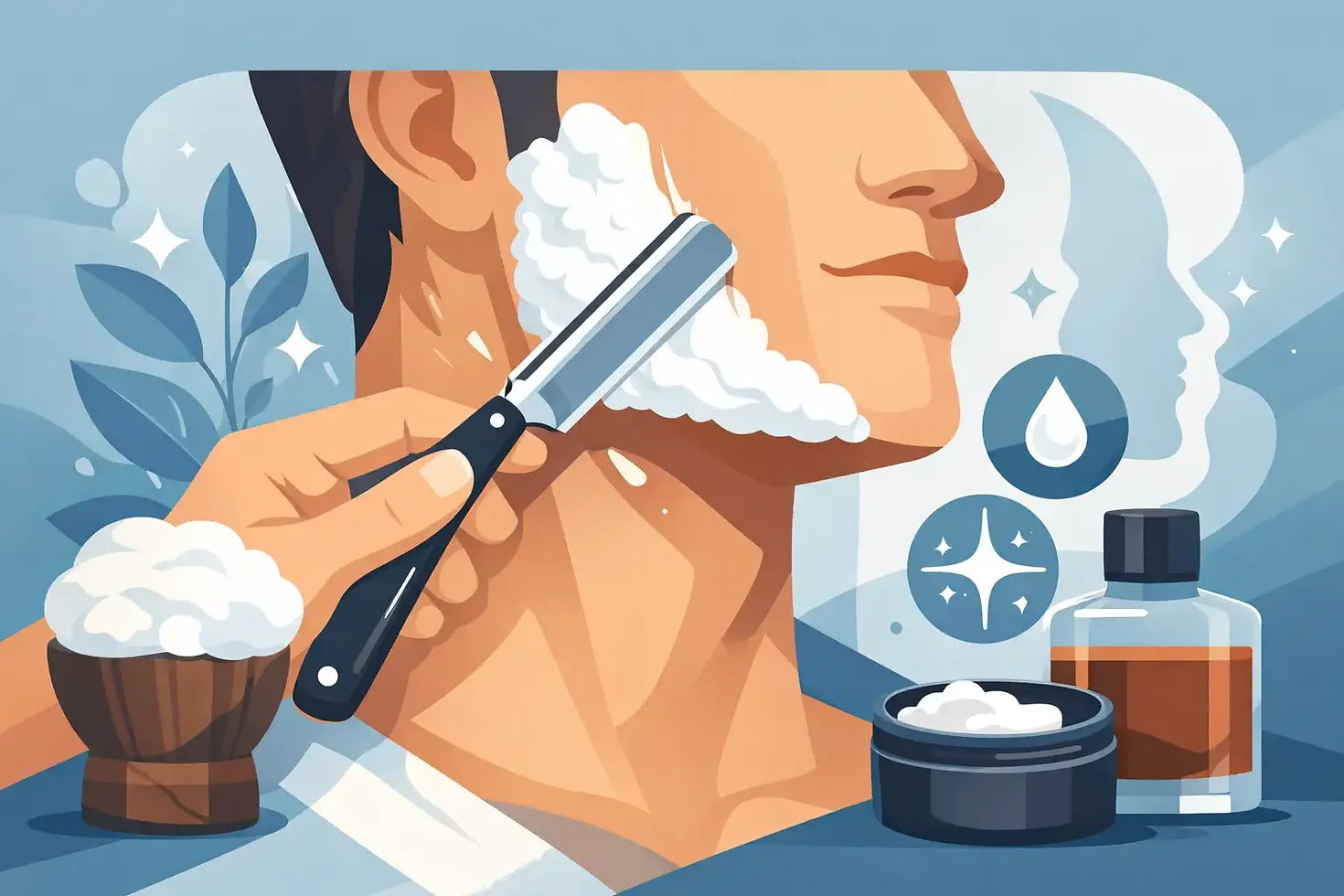
Is Straight Razor Shaving Better for Your Skin?

A close shave can change more than your face. When the beard is properly prepared, the skin feels smooth, the jawline looks sharper, and even a simple haircut or beard trim appears more intentional. But is straight razor shaving better than using a cartridge razor or electric shaver? For many men, yes - provided the technique, blade, and skin preparation are right.
The straight razor has earned its reputation for a reason. It offers exceptional control, can shave very close to the skin, and turns an everyday task into a proper grooming ritual. Still, it is not automatically the best choice for every face, every morning, or every skin type. The difference lies in how you use it.
Is straight razor shaving better than a cartridge razor?
A straight razor can deliver a closer result because a skilled hand uses a single, sharp edge at a precise angle. There are no stacked blades dragging repeatedly across the same area. That matters around the neck, under the jaw, and along beard lines, where hair often grows in different directions.
Multi-blade cartridges are convenient, especially when you are rushing to work. Yet the extra blades can create friction and pull hairs below the skin surface before cutting them. For men prone to razor bumps, redness, or ingrown hairs, this can be a frustrating pattern. A straight razor cuts cleanly at the surface when used well, reducing unnecessary passes over sensitive skin.
That said, closer is not always kinder. An overly aggressive shave, too much pressure, or a blade held at the wrong angle can remove more than stubble. It can leave the skin irritated and exposed. The razor itself is only part of the result. Preparation and technique do the rest.
What makes a straight razor shave feel different?
Traditional shaving is slower because it is more deliberate. Warm water softens the beard and helps the skin relax. A quality shaving cream or soap creates lubrication. The barber studies the direction of growth before the first stroke. These details sound small, but they are exactly what separates a comfortable shave from the kind that stings the moment you leave the bathroom.
At 4MEN.BARBERSHOP, traditional shaving is treated as skilled work, not an extra rushed between appointments. A barber pays attention to the individual face: dense beard growth, sensitive areas, old scars, a strong neckline, or a beard shape that needs clean definition rather than a fully smooth finish. That personal approach is why a professional straight razor shave often feels so different from doing it yourself in front of the mirror.
There is also the visual result. A straight razor creates crisp detail. It can clean the cheek line, sharpen the neck, and finish the edges of a moustache or short beard with precision. For a man who keeps a fade, textured crop, classic side part, or well-maintained beard, those clean lines bring the entire look together.
The single-blade advantage
One sharp blade gives the shaver more control over pressure and direction. Instead of relying on a pivoting cartridge head, the angle is adjusted by hand. In experienced hands, this means fewer unnecessary strokes and a finish that feels smooth without looking scraped.
For professional services, many modern barbers use a straight-razor-style shavette with a fresh disposable blade for every client. It provides the same detailed, traditional shaving method while meeting the hygiene standards clients should expect. A classic fixed-blade straight razor, by contrast, requires careful sharpening, stropping, cleaning, and maintenance.
The trade-offs: where straight razor shaving is not better
The honest answer is that a straight razor is not ideal for everyone. If you need a dry shave in five minutes before catching the metro, an electric shaver is the practical winner. If you are new to wet shaving and have shaky hands, learning on a straight razor can be unforgiving.
The learning curve is real. You need to understand your beard map, keep your skin taut, use a light touch, and shave in controlled sections. Most nicks happen when people try to copy the speed of a barber before developing the basics. A straight razor rewards patience, not confidence alone.
It may also be the wrong choice when the skin is already compromised. Active acne, eczema flare-ups, fresh sunburn, cuts, or severe irritation need a gentler approach. A skilled barber will not force a close shave simply because it was booked. Sometimes a careful beard tidy, an electric finish, or time for the skin to recover is the better call.
Cost and upkeep are worth considering too. A well-made traditional straight razor can last for years, but it needs proper care. You will need a strop, occasional professional honing, safe storage, and time to build the skill. A safety razor offers a useful middle ground for men who want a single blade and less plastic, without taking on the full discipline of straight razor shaving.
Better for sensitive skin? It depends on your routine
Men with sensitive skin often assume they need more blades for a smoother shave. In practice, they often benefit from less friction, sharper blades, and better preparation. A straight razor can be excellent for sensitive skin when the blade is fresh, the shave is not rushed, and the hair is cut with the grain first.
The mistake is chasing a perfectly glass-smooth result every day. Going against the grain on every area can feel satisfying in the moment but may trigger bumps on the neck the next day. For many men, especially those with coarse or curly beard hair, a close shave with the grain and then across the grain is more comfortable than repeated against-the-grain passes.
Aftercare matters just as much as the shave itself. Rinse away product with cool water, pat the face dry rather than rubbing it, and use a calming, alcohol-free balm if your skin feels tight. Strongly scented products and harsh aftershaves can hide irritation under a temporary burning sensation. Your skin does not need punishment to look sharp.
Signs your current shave needs a change
If you regularly experience burning that lasts longer than a few minutes, visible razor bumps, ingrown hairs, patchy areas, or the need to shave repeatedly over one spot, your current setup deserves a closer look. The answer may be a straight razor, but it could also be a new cartridge, a better cream, more time with warm water, or changing the direction of your passes.
A good shave is not defined by how much discomfort you tolerate. It is defined by a clean result that still lets your skin feel calm afterwards.
Should you try straight razor shaving at home?
Yes, if the ritual appeals to you and you are willing to learn slowly. Start by using the razor only for easy areas, such as the cheeks, while keeping your usual razor for the chin and neck. Learn how your beard grows before trying to shave against it. Use a proper shaving product with slip, change blades regularly if you use a shavette, and never treat a dull blade as something you can work around.
For many men, the smarter first experience is in the barber chair. You can see what a prepared beard, controlled blade angle, and clean finishing work actually feel like. It also gives you a better sense of whether you enjoy the ritual or simply prefer the result.
A straight razor shave is better when it gives you cleaner lines, less irritation, and a few unhurried minutes of care. If your best routine is an electric shaver on weekdays and a traditional shave before a weekend, wedding, date, or important meeting, that counts too. Choose the method that keeps your skin comfortable and makes you feel put together when you step back from the mirror.


Comments